Showing posts with label Inspirational Stories. Show all posts

Monday, 9 July 2018

Company of good and Wise People ( Story)

A master; a guru taught his disciple all that he knew. Having taught all the scriptures, he told the disciple that for the final teaching he would have to go to a nearby ashram. He told the disciple to go to another guru there for the final teaching. The disciple was wondering why his guru would send him to another guru. He was much more knowledgeable than the other guru.

Though in a dilemma; he decided to obey his guru and went to the nearby ashram to meet the other guru. To his surprise; the other guru had stopped teaching. He was engrossed in serving food to his disciples with love, cleaning up the left overs as well as washing the dishes.

The disciple saw this and learnt what it meant to serve out of love. Later he noticed something profound. The guru himself washed the dishes and kept them in order before he went to sleep.

Next morning, he used to take out the dishes, washed them again and started cooking. The disciple was wondering as to why the guru should wash the dishes all over again in the morning while they were already been washed thoroughly earlier in the night and that dishes were not dusty either. He observed all such details and came back to narrate to his earlier guru.

He narrated, ‘I cannot understand this strange fact of why should the guru in the ashram wash the already cleaned vessels again in the morning, why should he do that?”

To which his guru replied, “Yes, this is the understanding that I wanted you to observe and get totally.”

You cleanse your mind regularly but your mind starts collecting dust along the way in the form of a clutter, foggy and unclear understanding. Please do not say that you do meditation once and stop at that. So long as your mind gathers dust it has to be cleansed. It is a constant process of cleansing and purifying our mind.

Essence

Goal of every human is to realize his/her true self and finally merge in Him or the source. When we are so much entangled in our daily duties, relationships and other activities of the world; we seldom have time or even bother to ponder about our actual self. We always associate ourselves with our body and relationships we have built around us. Later when we lose these relationships or even when this body suffers we are so unhappy.

This is because we chase after something which is impermanent. True, it is no easy to understand this and it is easier said than done. But ‘satsang’ or company of good, wise people at least propels us to think about who we are and what is the ultimate goal of life? Without a Master or good company it is not easy for one to proceed into this self inquiry. So company of good is the first step towards the path of self realization. If we begin now; we know not when or in how many lifetimes we will achieve our goal. But we would have at least begun the journey on this path.

For Students

It is said; “Tell me your company and i will tell who you are”. It is very important to have good company and friends from young age. One rotten fruit can spoil the entire basket of fruits. So one must be careful in choosing their friends. The values which children develop at a younger age remains with them throughout their lives. Hence company of good friends and value based education from an early age is very vital

The 7 Wonders

Anna was a 9-year-old girl from the small village. She finished attending elementary school till 4th grade at her village. For the 5th grade onward, she will have to get an admission in a school at a city nearby. She got very happy knowing that she was accepted in a very reputed school in a city. Today was the first day of her school and she was waiting for her school bus. Once the bus came, she got in it quickly. She was very excited.

Once the bus reached to her school, all students started going to their classes. Anna also made it to her classroom after asking fellow students for direction. Upon seeing her simple clothing and knowing she is from a small village, other students started making fun of her. The teacher soon arrived and she asked everyone to keep quiet. She introduced Anna to the class and told that she will be studying with them only from today.

Then the teacher told the students to be ready for the surprise test now! She told everyone to write down the 7 wonders of the world. Everyone started writing the answer quickly. Anna started to write the answer slowly.

When everyone except Anna had submitted their answer paper, the teacher came and asked Anna, “What happened Dear? Don’t worry, Just write what you know as other students have learned about it just a couple of days back”.

Anna replied, “I was thinking that there are so many things, which 7 I can pick to write!” And, then she handed her answer paper to the teacher. The teacher started reading everyone’s answers and the majority had answered them correctly such as The Great Wall of China, Colosseum, Stonehedge, Great Pyramid of Giza, Leaning Tower of Pisa, Tajmahal, Hanging Gardens of Babylon etc.

The teacher was happy as students had remembered what she had taught them. At last the teacher picked up Anna’s answer paper and started reading.

“The 7 Wonders are – To be able to See, To be able to Hear, To be able to Feel, To Laugh, To Think, To be Kind, To Love!” The teacher stood stunned and the whole class was speechless. Today, a girl from the small village reminded them about the precious gifts that god has given us, which are truly a wonder.

Value what you have, use what you have, trust what you have. You don’t always have to look away to find an inspiration. God has given you all the strength to reach your goals.

By avoiding any situation one cannot face the challenges of life (Story)

Once upon a time, there was a tortoise who lived on a ship. One day the ship sank. After swimming for a long time, the tortoise reached a deserted land surrounded by water on all three sides. The landward side led up to a big, steep, craggy mountain.

The tortoise was tired from the long swimming, looked. For food, but there was nothing in that land for the tortoise to eat. To avoid starving to death, the tortoise decided to climb to the top of the mountain, hoping that on the other side of the mountain he would find something to eat.


As he got to the snow-covered summit of the mountain, he was freezing cold. Suddenly a snow storm started. He struggled hard and managed to make out a small pathway leading towards the other side of the mountain.snow

But the path was guarded by a big monster which were making lots of noise. The tortoise was terrified to death hearing the noises and wanted to hide his head inside his shell, but he controlled his fear and looked around him. He saw that many other animals were lying dead. The tortoise understood that those animals had died due to the unbearable cold. So the tortoise didn’t go into his shell for he understood that he too would die if he did not find a way to escape from that place.

He rallied his spirit and gathered courage to make his long journey towards the other side, which meant he had to cross the monsters.

As the tortoise started towards the monsters, the monsters changed their shapes. The tortoise came very close to the monster. Suddenly, the tortoise realized that it was actually a large pile of rocks and not monsters at all. The rocks were actually formed in the shape like monsters. As for the, the tortoise realized this was just the sound of the wind blowing through a small cave.

The tortoise felt confident and carried on with journey, and eventually descended into a beautiful valley. The valley was filled with woods, and plenty of food. The tortoise lived in that valley very happily, and became known to the others in the valley as the Brave Little Tortoise.

By avoiding any situation one cannot face the challenges of life. Something or the other will challenging us. It will create fear and insecurity in us. The only way to deal with the fear is to face it with all strength and faith. Most of the fears will be imaginary. Every problem has a solution. When our mind is clouded with fear we cannot act rationally and wisely.

Permanent residence in heaven ( Story )

One day a young man came to the Buddha, very upset. ‘What happened?’ asked the #Buddha. The young man said: ‘Sir, yesterday my father died. I have come to you with a special request. Please do something for my dead father. When ordinary priests perform some rites or rituals, he gains access to heaven. Sir, if a great man like you performs any rites or rituals for my father, he will gain not only entry but a permanent residence in heaven.

Buddha
Please sir, do something for my #father!’ He was so unbalanced, so emotional. The Buddha knew that any kind of rational argument would have no effect at this stage but he had his own way of explaining things. He asked the young man to go to the market and buy two earthen pots. The young man happily went and bought them, thinking that this was to prepare for some ritual. The Buddha asked him to fill one with butter and the other with stones and pebbles. He did all this.

The Buddha told him to close and seal them properly, and put them both in a nearby pond. He did so and both the pots sank to the bottom. The Buddha now told him to bring a stout stick, strike at them, and break them open. He did so, thinking that now the Buddha would perform a wonderful ritual for his father. #India is a vast and ancient land, full of diversities and extremes. There are people who have attained full enlightenment like the Buddha, and on the other hand, there are people in deep ignorance, immersed in blind faiths, beliefs, and dogmas. One belief is that when a parent dies, the son must take the corpse, put it on the funeral pyre and burn it; when it is half burned, he must take a strong stick, and break open the skull. The belief is that, as the skull is broken on earth, so the gateway of heaven is broken above, and the parent enters heaven. The young man thought that, as his father was already dead and cremated yesterday, the Buddha was asking him to break open these earthen pots as a substitute.

As he did so, the butter escaped from the first and floated to the surface; the pebbles escaped from the second pot and settled at the bottom. ‘Now,’ said the Buddha, ‘this much I have done. Now call all your priests. Let them come here and pray: ‘Oh pebbles, rise to the surface! Oh butter, sink to the bottom!’’ ‘Are you joking, sir? How is this possible? It is against the law of nature, sir. The pebbles are heavier than water; they are bound to stay down, they can’t float. Butter is lighter than water, it is bound to float; it cannot go down.’ ‘Young man, you know so much about the law of nature, and yet you do not want to understand the law that is applicable to one and all. If your father kept performing actions like pebbles and stones, he was bound to go down.

Who can pull him up? If he kept performing actions which are light like butter, he is bound to go up. Who can push him down?’ Our difficulty is that we think that some invisible power will somehow favor us, even though we do nothing to change our own behavior pattern, our own actions. When we understand this eternal law of nature—that the fruits depend on our actions—we will be careful about our actions. This discourse was given by the Buddha to Mahānāma the Sakyan.

Learn to not judge things too quickly ( Story )

There was a man who had four sons. He wanted his sons to learn to not judge things too quickly. So he sent them each on a quest, in turn, to go and look at a pear tree that was a great distance away.

The first son went in the winter, the second in the spring, the third in summer, and the youngest son in the fall. When they had all gone and come back, he called them together to describe what they had seen.


The first son said that the tree was ugly, bent, and twisted.

The second son said no – it was covered with green buds and full of promise.

The third son disagreed, he said it was laden with blossoms that smelled so sweet and looked so beautiful, it was the most graceful thing he had ever seen.

The last son disagreed with all of them; he said it was ripe and drooping with fruit, full of life and fulfillment.

The man then explained to his sons that they were all right, because they had each seen but one season in the tree’s life.


He told them that you cannot judge a tree, or a person, by only one season, and that the essence of who they are – and the pleasure, joy, and love that come from that life – can only be measured at the end, when all the seasons are up.

If you give up when it’s winter, you will miss the promise of your spring, the beauty of your summer, fulfillment of your fall.

Don’t judge a life by one difficult season. Don’t let the pain of one season destroy the joy of all the rest.

Tuesday, 26 June 2018

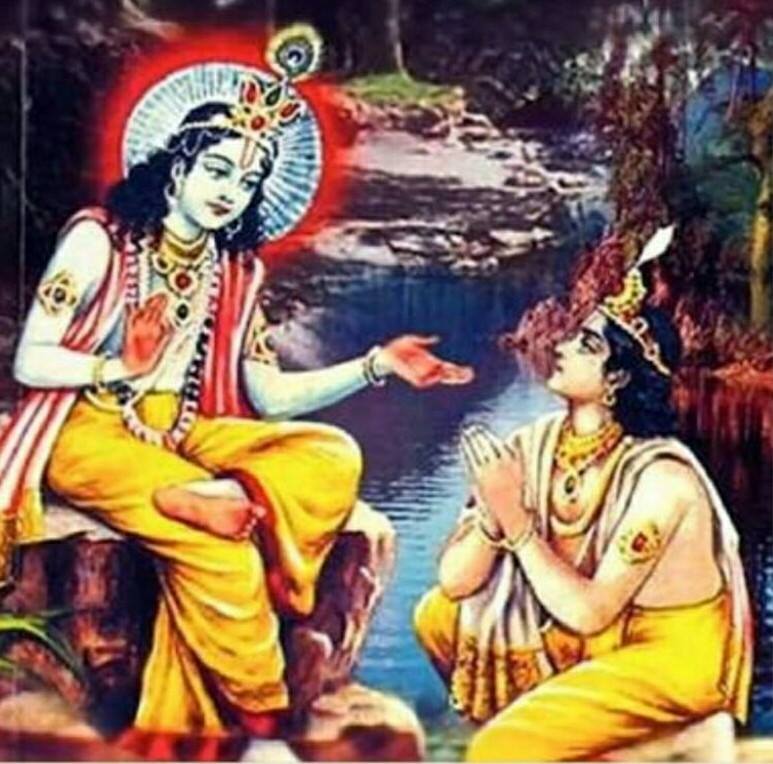
Why did Krishna not save the Pandavas when they played dice with Duryodhana & Shakuni?

Why did #Krishna not save the Pandavas when they played dice with Duryodhana & Shakuni? Wonderful explanation by Krishna himself in this story:


Krishna and Uddhav


From his childhood, Uddhava had been with Krishna, charioting him and serving him in many ways. He never asked for any wish or boon from Sri Krishna.

When Krishna was at the verge of completing His Avatar, he called Uddhava and said,
"Dear Uddhava, in this avatar of mine, many people have asked and received boons from me; but you never asked me anything. Why don’t you ask something now? I will give you.
Let me complete this avatar with the satisfaction of doing something good for you also".

Even though Uddhava did not ask anything for himself, he had been observing Krishna from his childhood. He had always wondered about the apparent disconnect between Krishna’s teachings and actions, and wanted to understand the reasons for the same.

He asked Krishna, "Lord, you taught us to live in one way, but you lived in a different way. In the drama of Mahabharat, in the role you played, in your actions, I did not understand many things. I am curious to understand the reasons for your actions. Would you fulfil my desire to know?"

Krishna said, "Uddhava, what I told Arjuna during the war of Kurukshetra was Bhagavad Gita. Today, my responses to you would be known as ‘Uddhava Gita’. That is why I gave this opportunity to you. Please ask without hesitation.’

Uddhava starts asking, "Krishna, first tell me who is a real friend?"

Krishna says, "The real friend is one who comes to the help of his friend in need even without being called."

Uddhava: "Krishna, you were a dear friend of the Pandavas. They trusted you fully as Apadhbhandava (protector from all difficulties). Krishna, you not only know what is happening, but you know what is going to happen. You are a great gyani. Just now you gave the definition of a true, close friend. Then why did you not act as per that definition. Why did you not stop Dharmaraj (Yudhishtra) from playing the gambling game?"

"Ok, you did not do it; why did you not turn the luck in favour of Dharmaraj, by which you would have ensured that dharma wins. You did not do that also. You could have at least saved Dharmaraj by stopping the game after he lost his wealth, country and himself. You could have released him from the punishment for gambling. Or, you could have entered the hall when he started betting his brothers. You did not do that either."

At least when Duryodhana tempted Dharmaraj by offering to return everything he lost if he bet Draupadi (who always brought good fortune to Pandavas), you could have intervened and with your divine power, you could have made the dice roll in a way that is favorable to Dharmaraj. Instead, you intervened, only when Draupadi almost lost her modesty and now you claim that you gave clothes and saved Draupadi’s modesty; how can you even claim this – after her being dragged into the hall by a man and disrobed in front of so many people, what modesty is left for a woman? What have you saved?"

"Only when you help a person at the time of crisis, can you be called ‘Apadhbandhava’. If you did not help in the time of crisis, what is the use? Is it Dharma?"

As Uddhava posed these questions, tears started rolling from his eyes.

These are not the questions of Uddhava alone. All of us who have read Mahabharata have these questions.

On behalf of us, Uddhava had already asked Krishna.

Bhagavan Krishna laughed, "Dear Uddhava, the law of this world is: ‘only the one who has Viveka (intelligence through discrimination), wins’. While Duryodhana had viveka, Dharmaraj lacked it. That is why Dharmaraj lost."

Uddhava was lost and confused.

Krishna continues : "While Duryodhana had lots of money and wealth to gamble, he did not know how to play the game of dice. That is why he used his Uncle Shakuni to play the game while he placed the bet. That is viveka."

"Dharmaraj also could have thought similarly and offered that I, his cousin, would play on his behalf. If Shakuni and I had played the game of dice, who do you think would have won? Can he roll the numbers I am calling or would I roll the numbers that he is asking for. Forget this. I can forgive the fact that he forgot to include me in the game."

"But, without viveka, he did another blunder. He prayed that I should not come to the hall as he did not want me to know that through ill-fate he was compelled to play this game. He tied me with his prayers and did not allow me to get into the hall; I was just outside the hall waiting for someone to call me through their prayers. Even when Bheema, Arjuna, Nakula and Sahadeva were lost, they were only cursing Duryodhana and brooding over their fate; they forgot to call me."

Even Draupadi did not call me when Dusshasan held her hair and dragged her to fulfil his brother’s order. She was also arguing in the hall, based on her own abilities. She never called me. Finally good sense prevailed; when Dusshasan started disrobing her, she gave up depending on her own strength, and started shouting ‘Hari, Hari, Abhayam Krishna, Abhayam’ and shouted for me. Only then did I get an opportunity to save her modesty. I reached as soon as I was called. I saved her modesty. What is my mistake in this situation?"

"Wonderful explanation, Kanna, I am impressed.
However, I am not deceived. Can I ask you another question’, says Uddhava.

Krishna gives him the permission to proceed.

"Does it mean that you will come only when you are called! Will you not come on your own to help people in crisis, to establish justice?’, asks Uddhava.

Krishna smiles, ‘Uddhava, in this life everyone’s life proceeds based on their own karma. I don’t run it; I don’t interfere in it. I am only a ‘witness’. I stand close to you and keep observing whatever is happening. This is God’s Dharma’.

"Wow, very good Krishna. In that case, you will stand close to us, observe all our evil acts; as we keep committing more and more sins, you will keep watching us. You want us to commit more blunders, accumulate sins and suffer", says Uddhava.

Krishna says, ’Uddhava, please realise the deeper meaning of your statements. When you understand & realise that I am standing as witness next to you, how could you do anything wrong or bad. You definitely cannot do anything bad. You forget this and think that you can do things without my knowledge. That is when you get into trouble.'

"Dharmaraj’s ignorance was that he thought he can play the game of gambling without my knowledge. If Dharmaraj had realized that I am always present with everyone in the form of ‘Sakshi’ (witness), then wouldn’t the game have finished differently?"

Uddhava was spellbound and was so very overwhelmed by Bhakti.

He said, "What a deep philosophy, Kesava.

What a great truth!"

Even praying and performing pooja and calling Him for help are nothing but our feelings / beliefs. When we start believing that nothing moves without Him, how can we not feel his presence as Witness? How can we forget this and act? Throughout #BhagavadGita, this is the philosophy Krishna imparted to Arjuna.

He was the charioteer as well as guide for Arjuna, but he did not fight Arjuna's War’: Realize that the Ultimate Sakshi / the one who is the Witness is within & within you! And Merge in that God Consciousness!

Please realise that God is with us all the time at the time when you do good as well as when you commit mistake. Every time I read this gives a smile on my face.

Please spread knowledge by sharing this with your friends.

A Zen story for the Youth

There is a Zen story I have loved very much. Three friends had gone for a morning walk, and then they suddenly saw on the hill a Zen monk standing.

One of the friends said, ”I think he must have come with his friends; they must have been left behind and he is waiting for them.”


The Zen story
The other said, ”I cannot agree with you, because seeing that man I can say one thing is certain; he is not waiting for somebody who has been left behind, because he never looks back. He is just standing like a statue. Anybody who is waiting for somebody who is left behind will once in a while look, to see whether the fellow has come or not. But he is unmoving.

”He is not waiting for any friend. I think... I know this monk; he has a cow and the cow must have been lost in the thick forest. And that is the highest place from where he can look all over the forest and find the cow.”

The third man said, ”You have forgotten your own argument. If he was looking for the cow then he would be looking all around. He would not just stand there like a statue, focused in one direction; that is not the way of looking for a lost cow.” He said, ”As far as I can tell, he is doing his morning meditation.”

But the other two said that the basic philosophy of Zen is that you can meditate anywhere, you can meditate doing anything. What was the need to go to that hill in the early morning, in the cold, and stand there to meditate? ”He could have meditated in his cozy monastery where they have a special meditation temple. He could have been there – what was the need to go? No, we cannot agree.”

They argued; finally they said, ”It is better we go to the hill. It will be a waste of time but there is no other way to settle what he is doing.” Such is the curiosity of the human mind – very monkeyish. Now why trouble yourself? Let him do whatever he is doing. If he is searching for his cow it is his business; if he is waiting for his friend, it is his friend; if he is meditating it is his business – why should you poke your nose into it? But that’s how people are.

They became so excited arguing with each other that they decided, ”We have to go.” They forgot that they had come just for a small morning walk, and going to the hill will take hours, then coming down the hill... the sun will be almost directly overhead. But the question... they have to come to a conclusion. And in fact they want to prove that ”I am right.” Each of them wants to prove that ”I am right.” Now the only man who can decide is that monk.

They reached – huffing, puffing. The monk was standing there with half-closed eyes. That is the Buddhist way – to keep the eyes half closed when you are meditating, because if you close your eyes completely you may doze into sleep; that is more possible than going into meditation. If you keep your eyes fully open you will get interested in thousands of things. A beautiful woman passes by, and meditation is lost, anything can disturb. So keep the eyes half closed so you don’t see exactly what is happening outside, and you have to keep your eyes half open so you don’t fall asleep.

The first man asked, ”Master, we have heard much about you but we never had any chance to come to your monastery. Fortunately we had come for a morning walk and we saw you. We have a question I want you to answer: Are you not waiting for somebody who has been left behind?”

The monk with half-closed eyes said, ”I have nobody, I am alone. I was born alone, I will die alone, and between these two alonenesses I am not trying to fool myself that somebody is with me. I am alone and I am not waiting for anybody.”

The second man said happily, ”Then certainly your cow has got lost in the thick forest and you must be looking for it.”

The monk said, ”It seems strange idiots have come here! I don’t possess a single thing. I don’t have any cow, the monastery has it; that is not my business. And why should I waste my time looking for a cow?”

The third man was immensely happy. He said, ”Now you cannot deny: you must be meditating. Is it not so? – you are doing your morning meditation!”

The monk laughed; he said, ”You are the worst idiot of the three! Meditation is not done, it is not a doing. You can be in meditation but you cannot do it. It is a state. So certainly I am not doing meditation. I am in meditation, but for that I need not come to this hill; anywhere I am in meditation. Meditation is my consciousness. So you all get lost! And never disturb anybody who is standing with half-closed eyes, remember it.”

But they all three said, ”Forgive us – we are stupid, certainly we are stupid to walk miles and to ask you such.... We are feeling embarrassed. But now that we have come and now that we accept we are stupid, just one question from all of the three, not separate: Then what are you doing?”And the master said nothing.

In that nothing is the witness.

When you witness, you will be surprised that the boredom, the sadness, the blissfulness, the ecstasy – whatever it is – starts moving away from you. As your witnessing goes deeper, stronger, becomes more crystallized, any experience – good or bad, beautiful or ugly – disappears. There is pure nothingness all around you.

Witnessing is the only thing that can make you aware of an immense nothingness surrounding you. And in that immense nothingness.... It is not empty, remember. In English there is no word to translate the Buddhist word #shunyata. In that nothingness... it is not empty, it is full of your witness, full of your witnessing, full of the light of your witness.

You become almost a sun, and rays from the sun are moving into the nothingness to infinity.

How many lives will it take for me to become like you? ( Story )

A beautiful story is told about a great mystic, Nagarjuna:

He was a naked fakir, but he was loved by all real seekers. A queen was also deeply in love with Nagarjuna. She asked him one day to come to the palace, to be a guest in the palace. Nagarjuna went. The queen asked him a favour.

Nagarjuna said, "What do you want?"

The queen said, "I want your begging bowl."


Nagarjuna gave it -- that was the only thing he had -- his begging bowl. And the queen brought a golden begging bowl, studded with diamonds and gave it to Nagarjuna. She said, "Now you keep this. I will worship the begging bowl that you have carried for years -- it has some of your vibe. It will become my temple. And a man like you should not carry an ordinary wooden begging bowl -- keep this golden one. I have had it made specially for you."

It was really precious. If Nagarjuna had been an ordinary mystic he would have said, "I cannot touch it. I have renounced the world." But for him it was all the same, so he took the bowl.

When he left the palace, a thief saw him. He could not believe his eyes: "A naked man with such a precious thing! How long can he protect it?" So the thief followed....

Nagarjuna was staying outside the town in a ruined ancient temple -- no doors, no windows. It was just a ruin. The thief was very happy: "Soon Nagarjuna will have to go to sleep and there will be no difficulty -- I will get the bowl."

The thief was hiding behind a wall just outside the door -- Nagarjuna threw the bowl outside the door. The thief could not believe what had happened. Nagarjuna threw it because he had watched the thief coming behind him, and he knew perfectly well that he was not coming for him -- he was coming for the bowl, "So why unnecessarily let him wait? Be finished with it so he can go, and I can also rest."

"Such a precious thing! And Nagarjuna has thrown it so easily." The thief could not go without thanking him. He knew perfectly well that it had been thrown for him. He peeked in and he said, "Sir, accept my thanks. But you are a rare being -- I cannot believe my eyes. And a great desire has arisen in me. I am wasting my life by being a thief -- and there are people like you too? Can I come in and touch your feet?"

Nagarjuna laughed and he said, "Yes, that's why I threw the bowl outside -- so that you could come inside."

The thief was trapped. The thief came in, touched the feet... and at that moment the thief was very open because he had seen that this man was no ordinary man. He was very vulnerable, open, receptive, grateful, mystified, stunned. When he touched the feet, for the first time in his life he felt the presence of the divine.

He asked Nagarjuna, "How many lives will it take for me to become like you?"

Nagarjuna said, "How many lives? -- it can happen today, it can happen now!"

The thief said, "You must be kidding. How can it happen now? I am a thief, a well-known thief The whole town knows me, although they have not yet been able to catch hold of me. Even the king is afraid of me, because thrice I have entered and stolen from the treasury. They know it, but they have no proof. I am a master thief -- you may not know about me because you are a stranger in these parts. How can I be transformed right now?"

And Nagarjuna said, "If in an old house for centuries there has been darkness and you bring a candle, can the darkness say, 'For centuries and centuries I have been here -- I cannot go out just because you have brought a candle in. I have lived so long'? Can the darkness give resistance? Will it make any difference whether the darkness is one day old or millions of years old.

The thief could see the point: darkness cannot resist light; when light comes, darkness disappears. Nagarjuna said, You may have been in darkness for millions of lives -- that doesn't matter -- but I can give you a secret, you can light a candle in your being."

And the thief said, "What about my profession? Have I to leave it?"

Nagarjuna said, "That is for you to decide. I am not concerned with you and your profession I can only give you the secret of how to kindle a light within your being, and then it is up to you."

The thief said, "But whenever I have gone to any saints, they always say, 'First stop stealing -- then only can you be initiated.'"

It is said that Nagarjuna laughed and said, "You must have gone to thieves, not to saints. They know nothing. You just watch your breath -- the ancient method of Buddha -- just watch your breath coming in, going out. Whenever you remember, watch your breath. Even when you go to steal, when you enter into somebody's house in the night, go on watching your breath. When you have opened the treasure and the diamonds are there, go on watching your breath, and do whatsoever you want to do -- but don't forget watching the breath."

The thief said, "This seems to be simple. No morality? No character needed? No other requirement?"

Nagarjuna said, "Absolutely none -- just watch your breath."

And after fifteen days the thief was back, but he was a totally different man. He fell at the feet of Nagarjuna and he said, "You trapped me, and you trapped me so beautifully that I was not even able to suspect. I tried for these fifteen days -- it is impossible. If I watch my breath, I cannot steal. If I steal, I cannot watch my breath. Watching the breath, I become so silent, so alert, so aware, so conscious, that even diamonds look like pebbles. You have created a difficulty for me, a dilemma. Now what am I supposed to do?"

Nagarjuna said, "Get lost! -- whatsoever you want to do. If you want that silence, that peace, that bliss, that arises in you when you watch your breath, then choose that. If you think all those diamonds and gold and silver is more valuable, then choose that. That is for you to choose! Who am I to interfere in your life?"

The man said, "I cannot choose to be unconscious again. I have never known such moments. Accept me as one of your disciples, initiate me."

Nagarjuna said, "I have initiated you already."

Religion is based not in morality but in meditation. Religion is rooted not in character but in consciousness.

Why should I ask forgiveness from the door?

A great Zen Master, Rinzai, was sitting. A man came. He pushed the door very hard – he must have been angry – he slammed the door. He was not in a good mood. Then he threw his shoes, and came in. Rinzai said 'Wait. Don't come in. First go and ask forgiveness from the door and from your shoes.'

Why should I ask forgiveness from the door?

The man said 'What are you talking about? I have heard that these Zen people are mad, but it seems true. I was thinking it was just rumour. What nonsense you are talking! Why should I ask forgiveness from the door? And it looks so embarrassing... those shoes are mine!'

Then Rinzai said 'You get out! Never come here again! If you can be angry at the shoes, why can't you ask their forgiveness? When you were angry, you never thought that it was so foolish to be angry with the shoes. If you can relate with anger, then why not with love? Relationship is relationship. Anger is a relationship. When you slammed the door with such anger, you related to the door; you behaved wrongly, immorally. And the door has not done anything to you. First go, otherwise you don't come in.'

Under the impact of Rinzai's silence, and the people sitting there, and that presence... like a flash, the man understood. He understood the logic of it, it was so clear. 'If you can be angry, then why can't you be loving? You go.' And he went. Maybe in his whole life that was the first time. He touched the door and tears started flowing from his eyes. He could not hold back those tears. And when he bowed down to his own shoes, a great change happened in him. The moment he turned and came towards Rinzai, Rinzai took him in his arms and embraced him.


This is reconciliation. How can you pray if you are unreconciled? How can you come to a Master if you are unreconciled with existence?

मित्र, एक चुनें लेकिन नेक चुनें - Hindi Inspirational Story

एक बेटे के अनेक मित्र थे जिसका उसे बहुत घमंड था। पिता का एक ही मित्र था लेकिन था सच्चा।
एक दिन पिता ने बेटे को बोला कि तेरे बहुत सारे दोस्त है उनमें से आज रात तेरे सबसे अच्छे दोस्त की परीक्षा लेते है।


बेटा सहर्ष तैयार हो गया।

रात को 2 बजे दोनों बेटे के सबसे घनिष्ठ मित्र के घर पहुंचे, बेटे ने दरवाजा खटखटाया, दरवाजा नहीं खुला, बार-बार दरवाजा ठोकने के बाद अंदर से बेटे का दोस्त उसकी माताजी को कह रहा था माँ कह दे मैं घर पर नहीं हूँ।

यह सुनकर बेटा उदास हो गया, अतः निराश होकर दोनों लौट आए।
फिर पिता ने कहा कि बेटे आज तुझे मेरे दोस्त से मिलवाता हूँ। दोनों पिता के दोस्त के घर पहुंचे। पिता ने अपने मित्र को आवाज लगाई।

उधर से जवाब आया कि ठहरना मित्र, दो मिनट में दरवाजा खोलता हूँ।

जब दरवाजा खुला तो पिता के दोस्त के एक हाथ में रुपये की थैली और दूसरे हाथ में तलवार थी। पिता ने पूछा, यह क्या है मित्र।

तब मित्र बोला....अगर मेरे मित्र ने दो बजे रात्रि को मेरा दरवाजा खटखटाया है, तो जरूर वह मुसीबत में होगा और अक्सर मुसीबत दो प्रकार की होती है,या तो रुपये पैसे की या किसी से विवाद हो गया हो। अगर तुम्हें रुपये की आवश्यकता हो तो ये रुपये की थैली ले जाओ और किसी से झगड़ा हो गया हो तो ये तलवार लेकर मैं तुम्हारें साथ चलता हूँ। तब पिता की आँखे भर आई और उन्होंने अपने मित्र से कहा कि, मित्र मुझे किसी चीज की जरूरत नहीं, मैं तो बस मेरे बेटे को मित्रता की परिभाषा समझ रहा था।

ऐसे मित्र न चुने जो खुद गर्ज हो और आपके काम पड़ने पर बहाने बनाने लगे अतः मित्र, एक चुनें लेकिन नेक चुनें।

Saturday, 10 June 2017

Good things in Life [ Story]

Once a man got lost in a desert. The water in his flask had run out two days ago, and he was on his last legs. He knew that if he didn't get some water soon, he would surely die. The man saw a small hut ahead of him. He thought it would be a mirage or maybe a hallucination, but having no other option, he moved toward it. As he got closer, he realized it was quite real. So he dragged his tired body to the door with the last of his strength.

The hut was not occupied and seemed like it had been abandoned for quite some time. The man entered into it, hoping against hope that he might find water inside.

His heart skipped a beat when he saw what was in the hut - a water hand pump...... It had a pipe going down through the floor, perhaps tapping a source of water deep under-ground.

He began working the hand pump, but no water came out. He kept at it and still nothing happened. Finally he gave up from exhaustion and frustration. He threw up his hands in despair. It looked as if he was going to die after all.

Then the man noticed a bottle in one corner of the hut. It was filled with water and corked up to prevent evaporation.

He uncorked the bottle and was about to gulp down the sweet life-giving water, when he noticed a piece of paper attached to it. Handwriting on the paper read : "Use this water to start the pump. Don't forget to fill the bottle when you're done."

He had a dilemma. He could follow the instruction and pour the water into the pump, or he could ignore it and just drink the water.

What to do? If he let the water go into the pump, what assurance did he have that it would work? What if the pump malfunctioned? What if the pipe had a leak? What if the underground reservoir had long dried up?

But then... maybe the instruction was correct. Should he risk it? If it turned out to be false, he would be throwing away the last water he would ever see.

Hands trembling, he poured the water into the pump. Then he closed his eyes, said a prayer, and started working the pump.

He heard a gurgling sound, and then water came gushing out, more than he could possibly use. He luxuriated in the cool and refreshing stream. He was going to live!

After drinking his fill and feeling much better, he looked around the hut. He found a pencil and a map of the region. The map showed that he was still far away from civilization, but at least now he knew where he was and which direction to go.

He filled his flask for the journey ahead. He also filled the bottle and put the cork back in. Before leaving the hut, he added his own writing below the instruction: "Believe me, it works!"

This story is all about life. It teaches us that We must GIVE before We can RECEIVE Abundantly.

More importantly, it also teaches that FAITH plays an important role in GIVING.

The man did not know if his action would be rewarded, but he proceeded regardless.

Without knowing what to expect, he made a Leap of Faith.

Water in this story represents the 'Good things in Life'

Give life some "Water" to Work with, and it will RETURN far more than you put in_.........!!!*

Tuesday, 4 April 2017

Too much Knowledge is not going to give you the enlightenment you were looking for #Rumi [story ]

One day Jalaluddin Rumi took all his students, disciples and devotees to a field. That was his way to teach them things of the beyond, through the examples of the world. He was not a theoretician, he was a very practical man. The disciples were thinking, “What could be the message, going to that faraway field... and why can’t he say it here?”

But when they reached the field, they understood that they were wrong and he was right. The farmer seemed to be almost an insane man. He was digging a well in the field – and he had already dug eight incomplete wells.

He would go a few feet and then he would find that there was no water. Then he would start digging another well... and the same story was continued. He had destroyed the whole field and he had not yet found water.

The master, Jalaluddin Rumi, told his disciples, “Can you understand something? If this man had been total and had put his whole energy into only one well, he would have reached to the deepest sources of water long ago.

But the way he is going he will destroy the whole field and he will never be able to make a single well. With so much effort he is simply destroying his own land, and getting more and more frustrated, disappointed: what kind of a desert has he purchased? It is not a desert, but one has to go deep to find the sources of water.”

He turned to his disciples and asked them, “Are you going to follow this insane farmer? Sometimes on one path, sometimes on another path, sometimes listening to one, sometimes listening to another... you will collect much knowledge, but all that knowledge is simply junk, because it is not going to give you the enlightenment you were looking for. It is not going to lead you to the waters of eternal life.”

We judge people by their outer appearance, which can be misleading [ Story]

A lady in a faded grey dress and her husband, dressed in a home-spun suit walked in timidly without an appointment into the Harvard University President's outer office. The secretary could tell in a moment that such backwoods, country hicks had no business at Harvard and probably didn't even deserve to be in Harvard.

"We want to see the President "the ma n said softly.

"He'll be busy all day "the secretary snapped.


"We'll wait" the lady replied.

For hours the secretary ignored them, hoping that the couple would finally become discouraged and go away. They didn't and the secretary grew frustrated and finally decided to disturb the president..

"Maybe if you see them for a few minutes, they'll leave" she said to him. The President, stern faced and with dignity, strutted toward the couple.

The lady told him "We had a son who attended Harvard for one year. He loved Harvard. He was happy here. But about a year ago, he was accidentally killed. My husband and I would like to erect a memorial to him, somewhere on campus."

The president wasn't touched....He was shocked. "Madam "he said, gruffly, " we can't put up a statue for every person who attended Harvard and died. If we did, this place would look like a cemetery."

"Oh, no," the lady explained quickly” We don't want to erect a statue. We thought we would like to give a building to Harvard."

The president rolled his eyes. He glanced at the gingham dress and homespun suit, and then exclaimed, "A building! Do you have any earthly idea how much a building costs? We have over seven and a half million dollars in the physical buildings here at Harvard."

For a moment the lady was silent. The president was pleased. Maybe he could get rid of them now. The lady turned to her husband and said quietly, "Is that all it costs to start a university ? Why don't we just start our own?"

Her husband nodded. The president's face wilted in confusion and bewilderment. Mr. and Mrs. Leland Stanford got up and walked away, traveling to Palo Alto, California where they established the University that bears their name: Stanford University, a memorial to a son that Harvard no longer cared about.


We judge people by their outer appearance, which can be misleading

 Most of the time we judge people by their outer appearance, which can be misleading. And in this impression, we tend to treat people badly by thinking they can do nothing for us. Thus we tend to lose our potential good friends, Relatives , employees or customers.

In our Life, we seldom get people with whom we want to share & grow our thought process. But because of our inner #EGO we miss them forever.

A lesson for Overprotective Parents

In two independent houses,separated by a compound two people were living, in one a retired person and in the other a techie. They had planted identical saplings on either sides of the compound.

The techie used to give lot of water and manure to the plants.The retired,just small quantity of water and little manure.

The techies plant grew into lush green,leafy robust plant.

The retired person's plant was a near normal but much luxuriant than his neighbor's.

One night there was a heavy rain with gusty wind.
Next morning both came out to see the fate of the plants.

To techie's surprise his plant had got uprooted where as his neighbor's was unharmed.

Techie asks the retired as why his plant was uprooted despite such a good care where as the neighbor had hardly cared.

The retired person's answer should be a lesson for all of us.

Inspirational Stories

Look young man, you had supplied every thing a plant would need,in abundance and the plant did not have to go in search of it.Your roots did not have go down. I was supplying just enough to keep it alive. For the rest roots had to go down into the ground to fulfil it's needs.

Since your roots were superficial the rain and wind could easily fell it.

Since my roots were pretty deeply grounded they could withstand the onslaught of the nature.

The same applies to your children too.

What goes around comes around [ Inspiring Story]

His name was Fleming, and he was a poor Scottish farmer. One day, while trying to make a living for his family, he heard a cry for help coming from a nearby bog. He dropped his tools and ran to the bog.

There, mired to his waist in black muck, was a terrified boy, screaming and struggling to free himself. Farmer Fleming saved the lad from what could have been a slow and terrifying death.

The next day, a fancy carriage pulled up to the Scotsman's sparse surroundings. An elegantly dressed nobleman stepped out and introduced himself as the father of the boy Farmer Fleming had saved.

'I want to repay you,' said the nobleman. 'You saved my son's life.'

'No, I can't accept payment for what I did,' the Scottish farmer replied waving off the offer. At that moment, the farmer's own son came to the door of the family hovel.

'Is that your son?' the nobleman asked.

'Yes,' the farmer replied proudly.

'I'll make you a deal. Let me provide him with the level of education my own son will enjoy. If the lad is anything like his father, he'll no doubt grow to be a man we both will be proud of.' And that he did.

Farmer Fleming's son attended the very best schools and in time, graduated from St Mary's Hospital Medical School in London, and went on to become known throughout the world as the noted

Sir Alexander Fleming, the discoverer of Penicillin.


Years afterward, the same nobleman's son who was saved from the bog was stricken with pneumonia. What saved his life this time? Penicillin.

The name of the nobleman? Lord Randolph Churchill ... His son's name?

Sir Winston Churchill

Someone once said:

What goes around comes around.
Work like you don't need the money.

Love like you've never been hurt.
Dance like nobody's watching.

Sing like nobody's listening.
Live like it's Heaven on Earth.

( Inspirational Stories - Like and share our Facebook Page with your friends and Family members to inspire them.)


May there always be work for your hands to do;
May your purse always hold a coin or two;
May the sun always shine on your windowpane;
May a rainbow be certain to follow each rain;
May the hand of a friend always be near you;
May God fill your heart with gladness to cheer you.

Thursday, 16 March 2017

भाई नन्द लाल जी और गुरु गोबिंद सिंह जी [ Hindi Story]

भाई नन्द लाल जी और गुरु गोबिंद सिंह जी साहिब जी में बहुत प्रेम था । भाई नन्द लाल जी जब तक गुरु गोबिंद सिंह जी साहिब जी के दर्शन नहीं कर लेते थे, तब तक अपना दिन नहीं शुरू करते थे । एक दिन भाई नन्द लाल जी ने जल्दी कहीं जाना था, लेकिन गुरु साहिब सुबह 4 वजे दरबार में आते थे । उन्होंने सोचा चलो गुरु साहिब जहाँ आराम करते हैं, वहीं चलता हूं... दरवाज़ा खटखटा करके मिल के ही चलता हूँ ।
.
सुबह 2 वजे गुरु गोबिंद सिंह साहिब जी अपने ध्यान में बैठे थे, तब नन्द लाल जी ने
दरवाजा खटखटाया.....
.
गुरु साहिब जी ने पूछा कौन है बाहर...?
.
नन्द लाल जी - मैं हूँ !
.
फिर पूछा - कौन है बाहर..?
.
नन्द लाल जी ने कहा.... मैं हूँ ..!
.
गुरु साहिब ने कहा जहाँ .....जहाँ ''मैं -मैं'' होती है वहाँ गुरु का दरवाज़ा नहीं खुलता ।
.
भाई नन्द लाल जी को महसूस हुआ, कि..... मैंने ये क्या कह दिया.... और फिर दरवाजा खटखटाया ।
.
तब गुरु साहिब जी ने फिर पूछा कौन है..?
.
नन्द लाल जी ने कहा.... ''तूँ ही तूँ '' ।
.
गुरु साहिब ने कहा इस में तो तेरी चतुराई दिख रही है... और जहाँ चतुराई होती है
वहाँ भी गुरु का दरवाज़ा नहीं खुलता ।
.
ये सुन के नन्द लाल जी रोने लग गये कि इतना ज्ञानी होके भी तुझे इतनी अकल
नहीं आयी...... (नन्द लाल जी बहुत ज्ञानी थे, 6 भाषा आती थी , उच्च कोटि के शायर थे ,)
.
उनका रोना सुन कर..... गुरु गोबिंद सिंह साहिब जी ने पूछा बाहर कौन
रो रहा है... ?
.
अब नन्द लाल रोते हुए बोले..... क्या कहूं सच्चे पातशाह..... कौन हूँ ..?
‘मैं’.... कहु तो हौमे.....(अहंकार) आता है..... ‘तूँ’.... कहूं तो चालाकी.... आती है
अब तो आप ही बता दो के.... मैं कौन हूँ...?
.
और दरवाज़ा खुल गया, आवाज़ आयी बस यही नम्रता होनी चाहिए......जहाँ ये
नम्रता है , भोलापन है.... वहाँ गुरु घर के दरवाज़े हमॆशा खुले हैं..... और गुरु गोबिंद सिंह साहिब जी ने भाई नन्द लाल को गले से लगा लिया .....
.
शिक्षा - सतगुरु सेवक के प्रेम - प्यार और नम्रता को दखते हैं ।
.
संत कहते हैं '' गुरु नहीं भूखा तेरे धन का, उन पर धन है भक्ति नाम का ''

I try to read the Bhagavat Gita just like you but I don't understand it [ story]

An old Farmer lived on a farm in the mountains with his young grandson.

Each morning Grandpa was up early sitting at the kitchen table reading his Bhagavat Gita. His grandson wanted to be just like him and tried to imitate him in every way he could.

One day the grandson asked, "Grandpa! I try to read the Bhagavat Gita just like you but I don't understand it, and what I do understand I forget as soon as I close the book. What good does reading the Bhagavat Gita do?"

The Grandfather quietly turned from putting coal in the stove and replied,"Take this coal basket down to the river and bring me back a basket of water."

The boy did as he was told, but all the water leaked out before he got back to the house. The grandfather laughed and said, "You'll have to move a little faster next time," and sent him back to the river with the basket to try again. This time the boy ran faster, but again the basket was empty before he returned home. Out of breath, he told his grandfather that it was impossible to carry water in a basket, and he went to get a bucket instead.

The old man said, "I don't want a bucket of water; I want a basket of water. You're just not trying hard enough," and he went out the door to watch the boy try again.

At this point, the boy knew it was impossible, but he wanted to show his grandfather that even if he ran as fast as he could, the water would leak out before he got back to the house.

The boy again dipped the basket into river and ran hard, but when he reached his grandfather the basket was again empty. Out of breath, he said, "See Grandpa, it's useless!"

"So you think it is useless ?" The old man said, "Look at the basket."

The boy looked at the basket and for the first time realized that the basket was different. It had been transformed from a dirty old coal basket and was now clean, inside and out.

"Son, that's what happens when you read the Bhagavat Gita. You might not understand or remember everything, but when you read it, you will be changed, inside and out. That is the work of Krishna in our lives."

Contentment is the most precious treasure [ Inspirational story ]

There once was a king who led his mighty army across the snowy peaks that bounded his kingdom, into his neighbor's realm. On the lofty pass thick with snow, he saw a mendicant or ascetic sitting on a bare rock, with his head between his knees evidently to protect it from the chill wind that cut across the gap in the peak. He had no clothes on his body.


The king was overcome with pity; he took off his own shawl and coat and offered them to the Yogi (ascetic; one who has mastered the senses and the mind).

The Yogi refused to accept them, for , he said "God has given enough clothing to guard me against the heat and cold. He gives me all that I need. Please give these to some one who is poor".
The King was surprised at these words. he asked him where that clothing was.

The Yogi replied "God himself has woven it for me; I am wearing it since birth and will wear it until the grave. Here it is, my skin! Give this coat and shawl to some mendicant beggar, some poor man".
The king smiled for, who can be poorer than he, he thought. He asked him, "But where can I find a poor man?"

The Yogi asked him , where he was going and why.

He said, "I am going into the realm of my enemy so that I can add his kingdom to my own".

The Yogi it was who smiled now. He said, "If you are not satisfied with the kingdom you have and if you are prepared to sacrifice your life and the lives of these thousands to get more land, certainly, you are much poorer than I. So offer the clothes to yourself. You need them more than I do".

At this the King was greatly ashamed and he understood the futility of fame and fortune.

He thanked the Yogi for opening his eyes to his own innate poverty.
Contentment is the most precious treasure, he realized.

Moral - Great men spread the light of their wisdom through their every word and deed.

Wednesday, 8 February 2017

Well, where are you going today? [ Inspiring Story ]

A Holy Man saw in a dream that while he was walking in the path of Truth an angel accosted him.

“Whither are you going?” asked the angel.

“I am on my way to the Royal Presence,” was the reply.


“You are engaged in so many wordly affairs,” said the angel. “You have taken such a lot of baggage with you, so much wealth and property. How can you hope to be admitted to the Royal Presence with all this paraphernalia?”

The saint thereupon threw away all the baggage he had and kept with him only a piece of blanket to protect him from inclement weather and serve as a garment. The next night he saw the angel again in a dream.

“Well, where are you going today?”

“To the seat of the Lord of Creation.”

“O man of wisdom,” said the angel, “how can you get there with this piece of blanket? It is a terrible obstacle in your way.”

Waking from his dream, the Holy Man put the blanket in the fire.

On the third night the saint saw the angel once more.

“O pure lover,” said the angel, “whither are you going?”

“I am going to the Creator of the Universe.”

“O illustrious man,” observed the angel, “now that you stripped yourself of all that you had, remain where you are. You have no need to go anywhere in search of the Creator. He will Himself come to you.”

#Book "The Conference of the Birds"

Are you determined to find the True Master ? [ Inspirational Story]

A man went in search of a Master. He was ready to go around the world, but he was determined to find the Master, the true Master, the Perfect Master.


Outside his village he met an old man, a nice fellow, sitting under a tree. He asked the old man, "Have you ever heard in your long life — you look like a wanderer…"

He said, "Yes, I am a wanderer. I wandered all over the earth."

The man said, "That is the right kind of person. Can you suggest to me where I should go? I want to be a disciple of a Perfect Master."

The old man suggested a few addresses to him, and the young man thanked him and went on.

After thirty years of wandering around the earth and finding nobody who was exactly fulfilling his expectations, he came back dejected, depressed. The moment he was entering his village he saw the old man who had become very old now, sitting under the tree. And suddenly he recognized that he is the Master! He fell at his feet and he said, "Why didn’t you say it to me, that you are the Master?"

The old man said, "But that was not time for you. You could not recognize me. You needed some experience. Wandering around the earth has given you a certain maturity, a certain understanding. Now you can see. Last time you had met me, but you had not seen me. You had missed. You were asking me about some Master. That was enough proof that you could not see me, you could not feel my presence, you could not smell the fragrance. You were utterly blind; hence I gave you some bogus addresses so you could go. But even to be with wrong people is good, because that is how one learns. For thirty years I have been waiting for you here, I have not left this tree."

In fact the young man, who was not young anymore, looked at the tree and was even more surprised. Because in his dreams, in his visions he was always seeing that tree and there was always a feeling that he would find The Master sitting under this tree. Last time he had not seen the tree at all. The tree was there, the Master was there, Everything was ready but HE was not ready.